
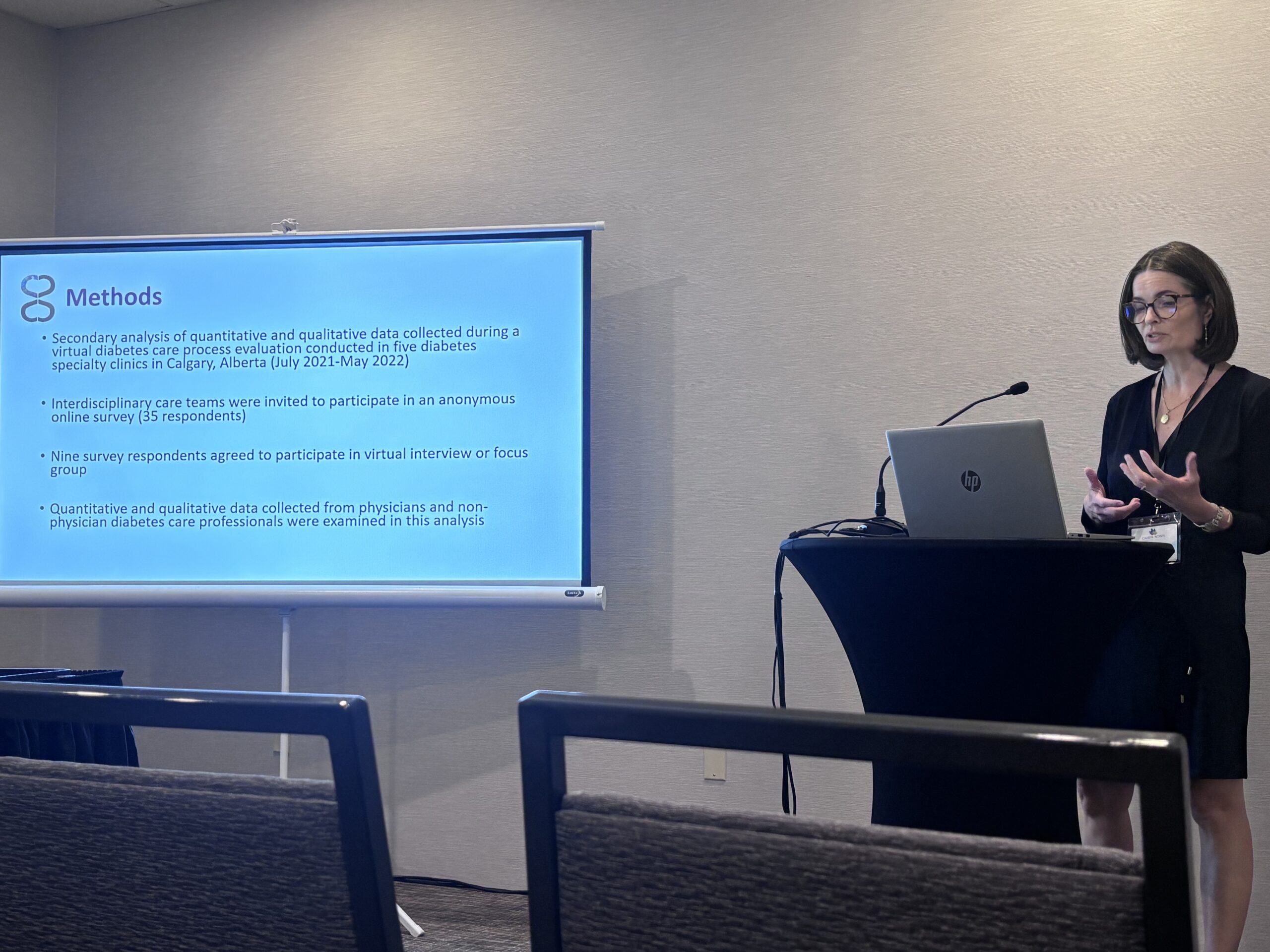
At the 2026 Canadian Association for Health Services and Policy Research (CAHSPR) Conference, Dr. Doreen Rabi presented an oral presentation titled Identifying Interprofessional Differences in Virtual Diabetes Care Delivery.
The rapid expansion of virtual care in diabetes management during the COVID-19 pandemic has improved access, education, and patient–provider communication. However, uptake varies across provider roles; where emerging evidence suggests variations in the use of virtual care modalities between health care providers. This study explored the factors and preferences influencing interprofessional differences in virtual care adoption within an interdisciplinary diabetes care team.
This secondary analysis examined data from a previous virtual care process evaluation that was conducted across five urban diabetes clinics in Western Canada. Data were originally collected between July 2021 and May 2022 through anonymous online questionnaires, semi-structured interviews, and focus groups. The present analysis included physicians and non-physician providers (NPPs), comprising nine interviews (4 physicians; 5 NPPs) and 31 open-text survey responses (11 physicians; 20 NPPs). Descriptive statistics summarized the use of virtual care modalities. Qualitative data were analysed thematically using iterative coding to compare shared and divergent perspectives across provider roles.
Findings revealed profession-specificvariations in virtual care experiences and preferences. NPPs prefered video appointments over telephone visits as using a video platform emphasized enhance support for patient engagement, building rapport, and delivering education. In contrast, physicians more often prioritized the efficiency of telephone appointments, particularly for routine follow-up tasks and brief clinical check-ins. Despite these differences, both provider groups identified shared challenges, including inconsistent audio and video quality and limited access to technical and organizational resources to support virtual care delivery. Additionally, physicians and NPPs agreed that virtual care, regardless of modality, was well-suited for follow-up appointments in diabetes care.
Interprofessional differences in virtual care preferences reflected distinct clinical roles and care priorities within diabetes teams. Aligning virtual care implementation with provider-specific needs and addressing shared technical and resource barriers may enhance uptake and optimize the effective use of phone and video modalities in interdisciplinary diabetes care.
References:
Rabi DM. Identifying interprofessional differences in virtual diabetes care delivery. Oral presentation presented at: Canadian Association for Health Services and Policy Research (CAHSPR) Conference; May 26-29, 2026.